Services
Commercial Leases & Business Real Estate
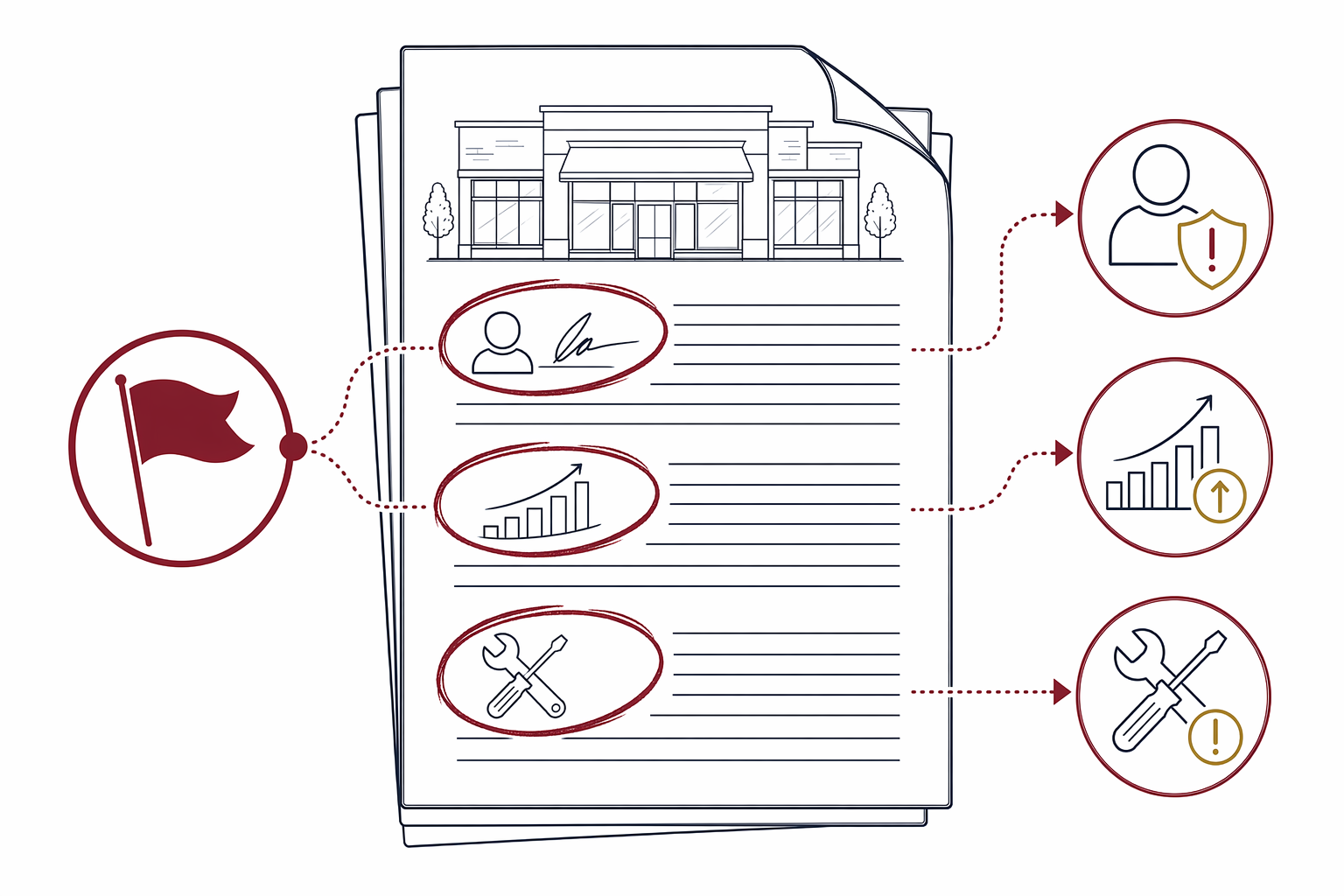
A commercial lease can lock your business into years of rent, repair duties, personal guarantees, and rules about how you use the space. Before you sign, a licensed business attorney can review the terms, explain the risks in plain English, and help you negotiate changes that fit your business.
What this service covers
Commercial leases are contracts for business space, such as a retail shop, office, warehouse, restaurant, salon, studio, or mixed-use location. Business real estate work can also include letters of intent, purchase and sale agreements, renewals, assignments, subleases, common-area charges, zoning questions, and disputes about repairs, deposits, or default notices.
A licensed attorney in this area usually helps with:
- Reviewing a proposed lease before you sign
- Explaining rent, security deposit, renewal, and termination terms
- Checking who pays for repairs, maintenance, taxes, insurance, and utilities
- Reviewing a personal guarantee, which is a promise that you personally pay if the business does not
- Negotiating build-out, tenant improvement, delivery, and move-in terms
- Reviewing use clauses, exclusivity terms, and rules on signage, parking, and hours
- Looking at assignment and sublease rules if you may sell the business or move later
- Reviewing purchase contracts, title, due diligence items, and closing documents for small-business real estate deals
This is general educational information only, not legal advice. FoundryCounsel is not a law firm and does not represent clients. We offer free matching to licensed attorneys.
Who should talk to an attorney before signing
This service is especially useful if the space matters to your revenue, equipment, licensing, or customer traffic. A problem in the lease can become a long and expensive problem later.
You may want an attorney if:
- The lease term is more than 1 year
- The landlord wants a personal guarantee
- You are spending money on build-out or improvements
- The lease has common-area maintenance charges, tax pass-throughs, or percentage rent
- You need permits, health approvals, or special use rights for your business
- You are taking over an existing lease by assignment or sublease
- You are buying property for the business instead of renting
- English is not your first language and you want the documents explained clearly before you commit
If you are still deciding on entity type, it may help to read LLC vs. corporation: which is right. An LLC is a limited liability company, a business structure that is separate from its owners under state law. A C-corp is a corporation taxed under Subchapter C of the Internal Revenue Code, and an S-corp is a tax election that can allow certain eligible companies to pass income and losses through to owners for federal tax purposes. If you have not formed the business yet, see How to form an LLC in the US.
What an attorney actually does in a lease or real estate matter
A good attorney does more than say a lease is "good" or "bad." They read the document closely, compare it to local practice, flag unusual risk, and suggest specific edits.
Common work includes:
- Reviewing the full lease package, amendments, exhibits, and rules
- Marking problem clauses and explaining them in plain language
- Proposing revisions to rent increases, renewal options, cure periods, guarantees, and default terms
- Negotiating landlord work, tenant improvements, delivery dates, and who pays for delays
- Checking use restrictions, zoning, and licensing issues that could affect your operations
- Reviewing insurance requirements and indemnity language, which is contract language about who pays if someone brings a claim
- Coordinating with your broker, accountant, lender, or contractor if needed
- For purchases, reviewing due diligence documents, title issues, contingencies, and closing terms
They may also review related contracts. For example, an NDA is a non-disclosure agreement, a contract used to protect confidential information, and an MSA is a master services agreement, a contract that sets the general terms for ongoing work between two businesses. If your lease is tied to a partnership, expansion, or vendor arrangement, related contract review can matter too. You can learn more at Contracts & Agreements and Partnership & Founder Agreements.
Typical steps, timing, and flat-fee ranges
The exact process depends on the state, the property, and how much negotiation is needed. Many owners first ask for a review before they sign a letter of intent or final lease.
A common process looks like this:
- You share contact details and a short description of the matter through Get matched. Do not send Social Security numbers, ITINs, EINs, bank account details, immigration status, or confidential business secrets through the form.
- We match you, for free, with a licensed attorney who handles commercial leases or small-business real estate matters in the relevant state.
- The attorney discusses scope, timing, and fees with you directly.
- You send the lease, draft agreement, or notice to the attorney through the attorney's intake process.
- The attorney reviews, advises, and if you choose, negotiates changes.
Flat-fee ranges are state-dependent and are not quotes. Actual pricing depends on the length of the document, urgency, negotiation rounds, and whether the deal is a lease review or a purchase transaction.
Typical ranges you may see:
- Basic commercial lease review with comments: about $400 to $1,200
- Lease review plus a short call and limited revision suggestions: about $750 to $2,000
- Lease review and attorney negotiation with landlord counsel: about $1,500 to $5,000+
- Assignment, sublease, or amendment review: about $500 to $2,500
- Small-business purchase or sale real estate document review: about $1,500 to $7,500+
For broader cost context, see How much does a business lawyer cost. Always confirm the scope in writing so you know what the flat fee covers and what would cost extra.
When you might handle it yourself, and when an attorney is worth it
Some very small matters may be manageable without a lawyer, especially if the risk is low and the document is simple. But many business owners underestimate how much liability can be hidden in a lease.
You might handle it yourself if:
- It is a short, simple renewal with no major changes
- The monthly rent is low and the term is short
- There is no personal guarantee
- You understand the business and building rules clearly
An attorney is usually worth it if:
- The landlord's form is long or one-sided
- You are making a large deposit or paying for improvements
- The lease shifts repair, tax, insurance, or legal-fee risk to you
- The space must qualify for a license, permit, food service use, or special equipment
- You may need to exit early, assign the lease, or sublease later
- The property purchase is tied to financing, title issues, or contingencies
The cost of one careful review can be smaller than the cost of a bad rent formula, a broad guarantee, or a repair obligation you did not expect. For business setup and compliance questions connected to a move or expansion, see Business Entity Formation and Business Compliance & Licensing.
What to ask an attorney, and how free matching works
Before you hire anyone, ask practical questions about the lease and about the attorney's process.
Good questions include:
- What are the biggest risks you see in this lease?
- Which clauses are most important to negotiate for my type of business?
- Do you expect issues with use, zoning, permits, signage, parking, or exclusivity?
- Is the personal guarantee negotiable?
- What does your flat fee include, and what would cost extra?
- How quickly can you review it before my deadline?
- Have you handled similar leases in this state?
You can also verify business filing and entity information with the Secretary of State in the state where the business is formed, tax information on IRS.gov, and trademark information on USPTO.gov if branding for the location matters. For legal advice about your specific lease, rely on a licensed attorney.
FoundryCounsel is not a law firm and does not give legal advice. Our service is free for business owners. Participating attorneys pay a flat marketing fee to be included in the network. You can learn more at How it works, browse other Services, or start here: Get matched.
An honest note
This is general educational information, not legal advice, and does not create an attorney-client relationship. Laws and fees vary by state and change over time — confirm details with a licensed attorney and official sources before you act.
Before you commit to business space, a licensed attorney can review the lease, explain the risks, and help you ask for better terms, and FoundryCounsel can match you for free at /get-matched/.
Common questions
Can a lawyer really help if the landlord says the lease is non-negotiable?
Sometimes yes. Even when a landlord uses a standard form, certain business points may still be negotiable, such as guarantee limits, repair duties, renewal options, delivery conditions, or cure periods. No one can promise changes, so be cautious of anyone who guarantees a result.
Should I ask for legal review before the letter of intent or after the full lease?
Earlier is usually better. A letter of intent can shape the main business terms before the full lease is drafted, and a lawyer can also review the final lease before you sign.
Do I need a lawyer for a small office lease?
Not always. If the lease is short and simple, the rent is modest, and there is no personal guarantee or build-out, some owners choose to handle it themselves. If the document is long, the term is long, or the space is important to your operations, legal review is often worth it.
What documents should I have ready for a first call?
Usually the draft lease, letter of intent, any amendment or assignment documents, and a short summary of your business use for the space. Use secure channels provided by the attorney for documents, and do not send sensitive personal or financial identifiers through a matching form.
How long does lease review usually take?
Simple reviews can sometimes move quickly, while negotiated matters often take longer. Timing depends on document length, deal complexity, the landlord's response time, and the attorney's schedule.
Ready to talk to a business-law attorney?
Get matched, free, with licensed business attorneys in your state. You compare flat-fee quotes and choose who to hire — and you confirm the fee and scope in writing before any work starts.