Guides
Avoiding Business Legal Scams and Bad-Actor Tactics
Starting a US business often means getting emails, letters, and calls that look official but are really sales pitches or scams. This guide explains common bad-actor tactics, how to verify what is real, and when it may help to speak with a licensed attorney for general legal help.
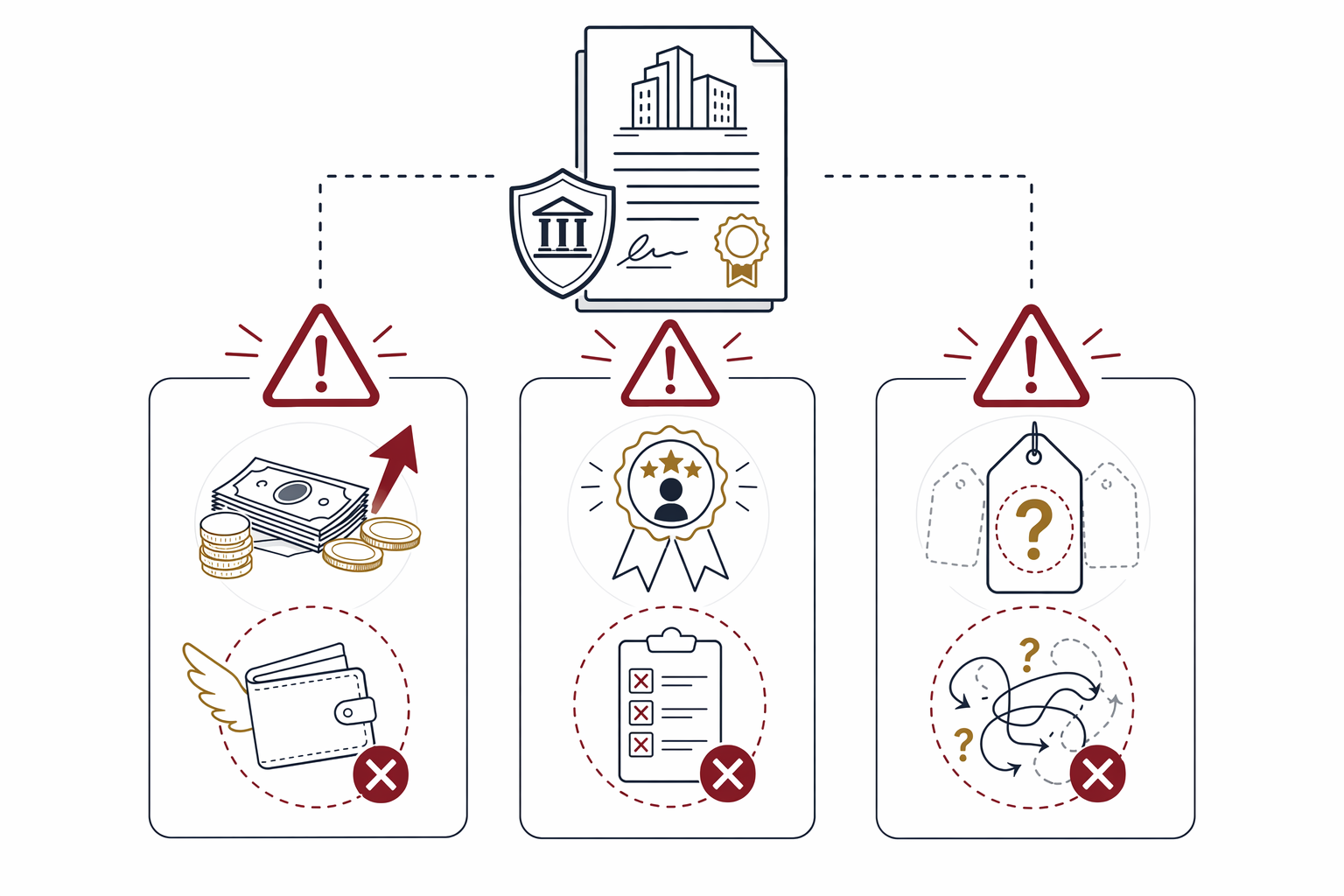
Why new business owners are common targets
Scammers know that new owners are busy, unfamiliar with US rules, and often worried about missing a deadline. If you just formed a company, your business name and address may appear in public state records, which makes it easier for bad actors to contact you.
Common targets include people forming an LLC (limited liability company, a business structure that can separate the owner's personal assets from business debts in many situations), a corporation, or a DBA ("doing business as," a registered business name that is different from the owner's or company's legal name).
Many scam messages are designed to feel urgent. They may mention your filing date, state file number, or company name to look real. That does not make them official.
A good starting rule is simple: before you pay anything, confirm whether the request came from the right government agency, such as your state's Secretary of State, or from a licensed attorney you chose yourself.
If you are still deciding how to set up your company, these guides may help: How to Form an LLC in the US, LLC vs. Corporation: Which Is Right, and What Is an EIN and How to Get One.
The most common business legal scams
Some scams are criminal fraud. Others are aggressive marketing dressed up to look like a government notice. Both can cost you money and time.
Here are common examples:
- Fake annual report or certificate fees. A letter says you must pay immediately to keep your company active. It may use words like "certificate of status," "compliance notice," or "entity renewal." Your real filing obligations usually come from your state's Secretary of State or another official state agency.
- Official-looking mail about an EIN. An EIN (Employer Identification Number, a federal tax ID issued by the Internal Revenue Service) is usually obtained directly from IRS.gov. Some companies charge a fee to "help" even though the IRS application itself is generally free.
- Guaranteed trademark approvals. A trademark is a brand name, logo, or phrase used to identify goods or services. No one can honestly guarantee registration because the decision is made by the US Patent and Trademark Office at USPTO.gov after review.
- Misleading BOI filings. A BOI report (Beneficial Ownership Information report, a federal ownership report for certain companies under federal rules) has been an area of confusion because reporting rules and deadlines have changed through court cases and agency updates. Bad actors use that confusion to demand fees. Always check the current rule directly with the official federal source and, if needed, a licensed attorney.
- Fake registered agent invoices. A registered agent is a person or company authorized to receive legal papers and official mail for your business. Some mailers look like invoices even though you never hired that service.
- Vague contract-review offers. You may be offered "legal protection" without any clear attorney name, state license, scope of work, or price range.
- Business credit or grant scams. Messages promise fast funding, guaranteed credit lines, or government grants if you pay a setup fee first.
Be especially cautious if the message demands payment by wire, gift card, cryptocurrency, or a payment app tied to a personal account.
Red flags to look for before you pay
A few warning signs show up again and again.
- The notice looks official, but the sender is not a government agency. Check the sender name, website, email domain, and mailing address.
- It says approval is guaranteed. No honest person can guarantee business formation approval, trademark registration, licensing, visa results, or tax outcomes.
- The pricing is unclear. Good service providers explain what they do, what documents are included, and what the expected flat-fee range is. Costs for business legal work are state-dependent and matter-dependent, so ranges are not quotes.
- The form asks for sensitive information too early. Do not send your Social Security number, ITIN, EIN, immigration status, bank account numbers, or confidential business secrets through a general contact form. Contact details and a short description of the issue are enough for an initial inquiry.
- The website does not identify a licensed attorney. If the service says it provides legal help, you should be able to confirm the lawyer's name, state license, and contact details.
- It pressures you to act the same day. Real legal work sometimes has deadlines, but pressure is also a common sales tactic.
- The documents are generic and incomplete. For example, an operating agreement (the internal document that explains how an LLC is owned and managed) should fit the owners' real arrangement, not just fill in names.
If a price sounds low, ask what is actually included. A cheap filing package may not include an operating agreement, state publication steps where required, a registered agent, tax elections, licenses, or follow-up corrections.
How to verify a filing, fee, or legal service
When you get a notice or offer, slow down and verify it in a few steps.
- Check the source directly. If the notice mentions your company filing, go to your state's Secretary of State website by typing the address yourself. Search your company record there.
- Compare the fee with the official agency fee. State filing fees vary by state and filing type. Use the state agency website, not the mailer, to confirm the amount.
- Confirm federal tax matters on IRS.gov. If the notice is about an EIN, tax ID, or IRS filing, check IRS.gov directly.
- Confirm trademark matters on USPTO.gov. If someone claims they can register your trademark quickly or guarantee success, verify the process and status through USPTO.gov.
- Look up the attorney's license. If someone says they are a lawyer, confirm they are licensed in a US state and in good standing through the state's attorney directory.
- Ask for the scope in writing. For legal work, request a plain-language description of what the lawyer or law firm will do and what is not included.
Useful business formation documents to know by name:
- Articles of organization are the state formation document used to create an LLC.
- NDA means non-disclosure agreement, a contract where one or both sides agree to keep certain information confidential.
- MSA means master services agreement, a main contract that sets general rules for an ongoing business relationship.
If you want help finding a licensed business attorney, get matched through FoundryCounsel. The matching service is free for business owners. FoundryCounsel is not a law firm and does not provide legal advice or create an attorney-client relationship.
Honest cost notes: what is normal, and what is suspicious
Scam pricing often hides the real service or makes a simple task sound urgent and complex. A legitimate provider should be able to explain both the government fee and the service fee.
A few examples:
- State formation fees. LLC and corporation filing fees are set by the state. They often range from about $40 to $500 depending on the state and filing, but that range is not a quote.
- Registered agent service. Private registered agent services often charge an annual flat fee. Many businesses see ranges around $50 to $300 per year depending on the provider and state, but that range is not a quote.
- Attorney formation help. Legal flat-fee ranges for forming a business can vary widely by state and complexity. A single-owner LLC is not the same as a multi-founder company with custom ownership terms. See How Much Does a Business Lawyer Cost.
- Trademark legal help. USPTO filing fees are separate from any attorney fee. Be cautious if someone bundles everything into one vague number without explaining what happens if the application gets an office action, which is an official USPTO notice raising issues.
Suspicious pricing patterns include:
- a fee that must be paid today with no written engagement
- one price that supposedly covers every state and every situation
- no distinction between official filing fees and private service fees
- no refund policy or no explanation of next steps
When in doubt, compare the offer with the official agency website and at least one licensed attorney.
How to protect your company from bad contracts and fake legal help
Not every problem starts with a fake government letter. Some owners get hurt by weak contracts, unclear ownership terms, or people doing legal work without proper qualifications.
A few practical steps can reduce risk:
- Use written agreements early. If you have co-founders, get the ownership, roles, voting rights, and exit rules in writing. See Partnership and Founder Agreements.
- Review key customer and vendor contracts. A short contract can still create major risk if payment terms, liability limits, intellectual property ownership, or termination rights are unclear. Learn more at Contracts and Agreements.
- Be careful with lease documents. A commercial lease can lock you into years of obligations. See Commercial Leases and Real Estate.
- Track compliance deadlines. Annual reports, business licenses, and tax filings come from different agencies. For general help understanding common issues, visit Business Compliance and Licensing.
- Keep copies of filings and receipts. Save the stamped state filing, payment confirmation, operating agreement, EIN letter, and important notices in one place.
If you want to understand what a lawyer can help with before reaching out, see Services or How It Works.
What to do if you think you already paid a scammer
Act quickly, but stay calm. Some problems can still be limited if you move fast.
- Stop further payments. Do not send more money just because the sender threatens penalties.
- Contact your bank or card issuer. Ask whether the payment can be reversed or flagged as fraud.
- Change passwords if needed. If you clicked links or shared login details, update your passwords right away.
- Check your official records. Confirm your company status with the Secretary of State and your tax information with IRS.gov.
- Document everything. Save the letter, envelope, screenshots, emails, receipts, and call logs.
- Speak with a licensed attorney if the issue is serious. This is especially important if money was lost, contracts were signed, or confidential business information may have been exposed.
FoundryCounsel is a free matching service for business owners who want to connect with a licensed business-law attorney. It is not a law firm and does not give legal advice. You can get matched or browse more guides for general educational information.
An honest note
This is general educational information, not legal advice, and does not create an attorney-client relationship. Laws and fees vary by state and change over time — confirm details with a licensed attorney and official sources before you act.
If a business notice feels urgent, vague, or too official-looking, verify it first with the government agency or a licensed attorney before you pay.
Common questions
How can I tell whether a business notice is really from the state?
Check the sender against your state's Secretary of State website by typing the web address yourself, not by clicking the notice. Official state notices should match the agency name, website, and fee information shown on the government site.
Is it normal to get lots of mail after forming an LLC or corporation?
Yes. New business records are often public, so many companies send marketing mail that looks official. Some of it may be legitimate advertising, but some of it is misleading, so verify each request before paying.
Can anyone guarantee my LLC filing, trademark, or license approval?
No. Government agencies decide whether filings and applications are accepted, and they can reject or question them. Be cautious of anyone who promises guaranteed results.
Should I send my SSN, EIN, or bank information through an online contact form?
No. For an initial inquiry, contact details and a short description of the issue are enough. Sensitive personal, tax, immigration, banking, and confidential business information should not be sent through a general form.
Do I need a lawyer to start a small business in the US?
Not every business needs a lawyer for every step, but legal help can be useful when ownership is shared, contracts are important, a lease is involved, or you are unsure about state rules. Official sources like the Secretary of State, IRS.gov, and USPTO.gov are also important for checking requirements.
Ready to talk to a business-law attorney?
Get matched, free, with licensed business attorneys in your state. You compare flat-fee quotes and choose who to hire — and you confirm the fee and scope in writing before any work starts.